
Cone Beam CT Scanner Bellingham
Next-Generation Dental Imaging
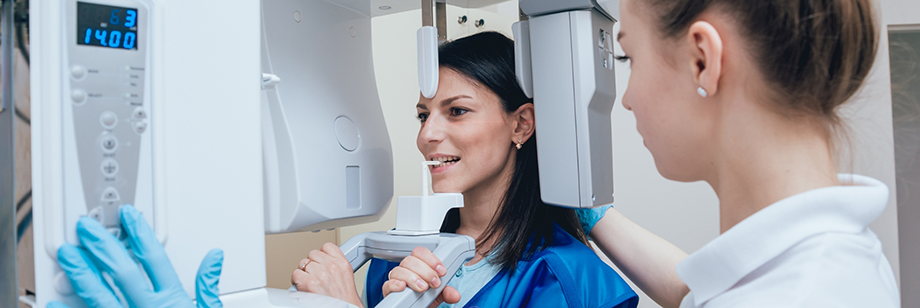
The Young Dental team is dedicated to incorporating the latest dental technologies to provide precise, safe, and comfortable dental services for our patients. That includes using our state-of-the-art cone beam CT scanner to capture 3D images of your face and smile. CT scans offer us complete images that allow us to provide treatment planning for the most advanced procedures. If you want to find out more or schedule an appointment with us in our Bellingham dental office, call our caring team today. We look forward to seeing you soon.
What Is a CT Cone Beam Scanner?
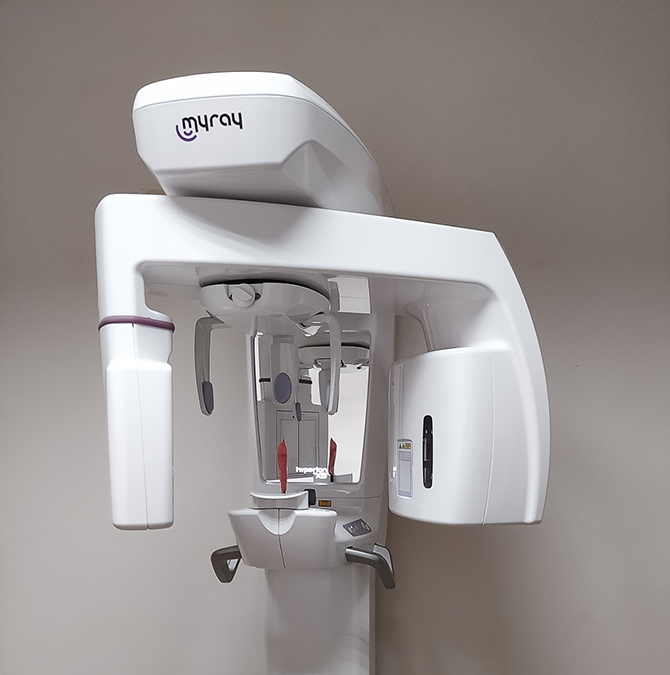
A computed tomography (CT) scanner uses advanced cone beam radiography technology to create 3D images of teeth and dental structures, soft tissues, nerve paths, and craniofacial bones. These scans can be used to create complete images of the interworking of the teeth, gums, and facial structures.
How Is the CT Cone Beam Scanner Different from X-Rays?
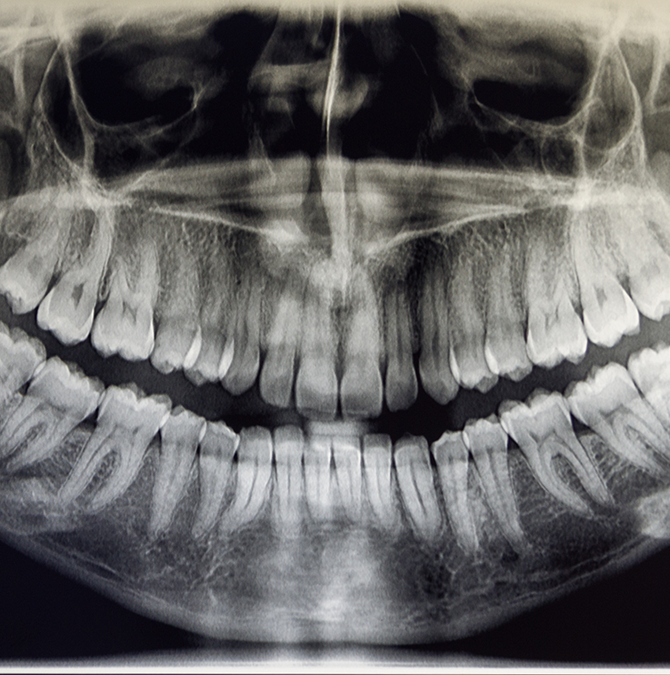
Traditional X-ray scans create flat, two-dimensional images of sections of teeth. These can be viewed in sequence to get an idea of how the major oral and facial structures work together, but CT scans are 3D and can capture the entire face and mouth. That means we can view how the mouth is working, see the way the bite fits together, and even see how your airway functions. All of those technical terms aside, consider the difference between seeing a picture of an apple and holding the apple itself. A photo is 2D. It doesn’t give you a completely accurate representation of the size, shape, and density of the apple. That’s the real difference between a CT cone beam scan and a traditional X-ray. We can more clearly see the size and shape of all the oral and facial structures, making CT scans ideal for complex treatment planning.
What Is a CT Cone Beam Scanner Used For?
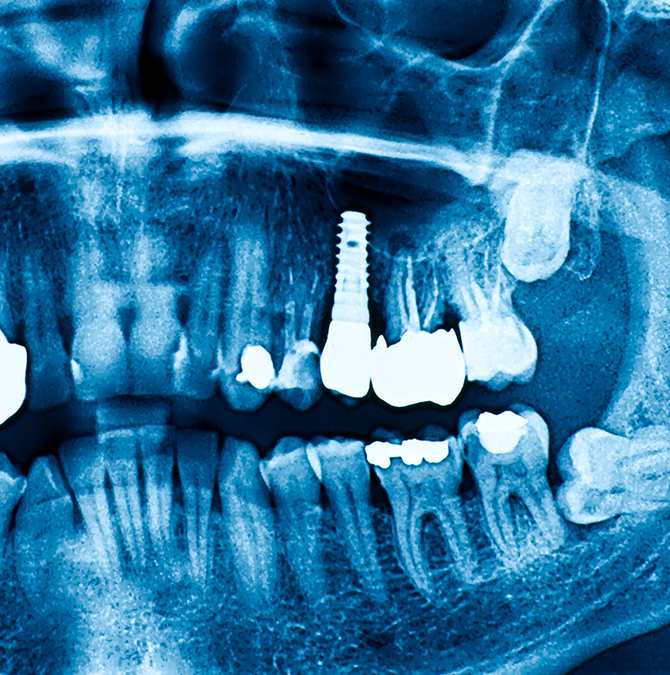
We may use a 3D cone beam scan in planning a variety of treatments, including:
- Orthodontics
- Dental implant placement
- Tooth extractions
- TMJ dysfunction therapy
- Root canal imaging
- Infection screening
How Does the CT Cone Beam Scanner Work?
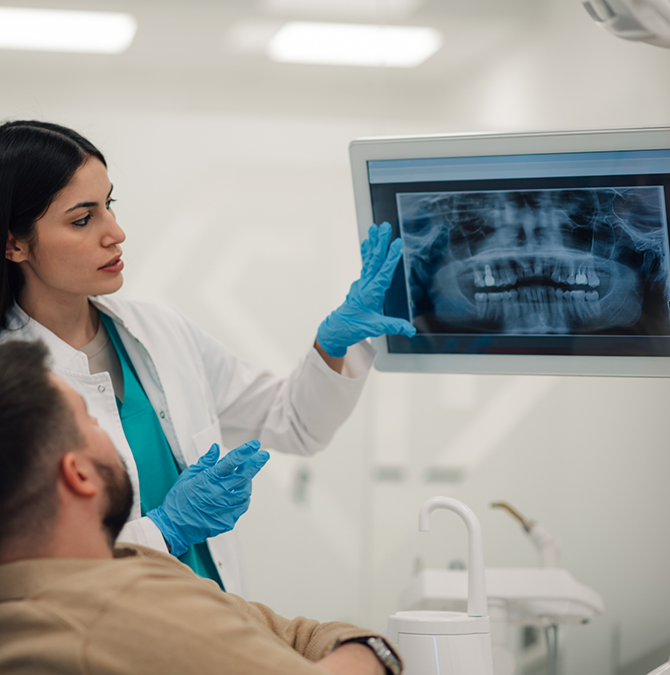
The process is simple and painless. You’ll stand in front of the CT scanner and bite down on a mouthpiece. The scanner itself will quickly move around your head, capturing 1000s of images in just seconds. These images are then visible immediately on our chairside computer monitor, where we can review the 3D scans with you to thoroughly explain your treatment plan. These images can also be shared with our lab, dental specialists, and insurance providers as necessary.
Is the CT Cone Beam Scanner Safe?
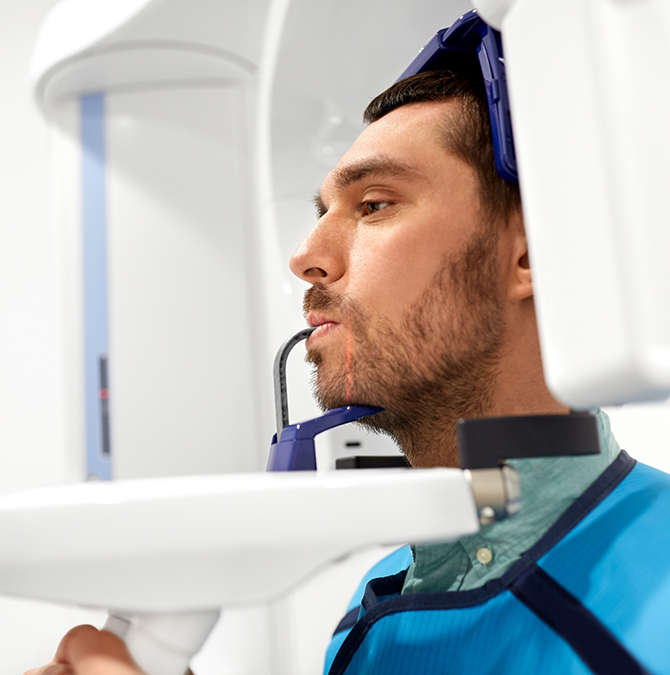
CT scans do expose patients to slightly higher levels of radiation than traditional X-rays. They capture the photos much more quickly and are used much less frequently, so capturing CT scans is perfectly safe in moderation.